
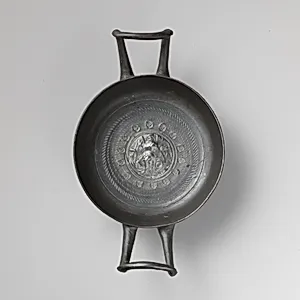
Terracotta stemless kylix (drinking cup)
Unknown Artist
late 4th–3rd century BCE
Medium
Terracotta
Dimensions
H.: 2 x 4 7/8 in. (5.1 x 12.4 cm)
Classification
Vases
Culture & Period
Greek, South Italian, Campanian, Calenian · Hellenistic
Department
Greek and Roman Art
Museum
Metropolitan Museum of Art, New York, NY
Credit
Rogers Fund, 1906
Accession Number
06.1021.278
Rights
Public Domain
Tags
Art Historical Context
This delicate terracotta stemless ky, or drinking cup, hails from the Hellenistic period (late 4th–3rd century BCE) in South Italian Campanian culture, specifically the Calenian workshops near modern-day Campania. Measuring just 2 inches high and 4⅞ inches wide, its shallow, wide-mouthed form was ideal for sipping wine at symposia—lively male social gatherings where philosophy, poetry, and revelry flowed freely. Crafted from fired clay, these vases exemplify the enduring Greek tradition of wheel-thrown pottery, often decorated with red-figure or black-glaze techniques that highlighted everyday life and mythology. The "Men" tag hints at figural scenes likely depicting banqueters, athletes, or warriors, reflecting the Hellenistic emphasis on realism, emotion, and domestic themes amid expanding Greek influence in southern Italy. Calenian potters blended Attic sophistication with local flair, producing affordable yet elegant wares for both elite and everyday use. Acquired through the Rogers Fund in 1906, this piece now graces the Metropolitan Museum of Art's Greek and Roman Art department, offering a tangible glimpse into ancient conviviality and the artistry of anonymous masters.