
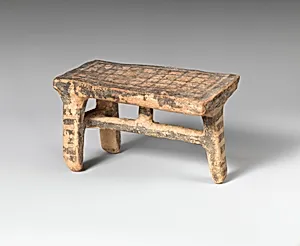
Terracotta table
Unknown Artist
ca. 600–480 BCE
Medium
Terracotta
Dimensions
H. 2 7/8 in. (7.3 cm)
Classification
Terracottas
Culture & Period
Cypriot · Cypro-Archaic II
Department
Greek and Roman Art
Museum
Metropolitan Museum of Art, New York, NY
Credit
The Cesnola Collection, Purchased by subscription, 1874–76
Accession Number
74.51.1790
Rights
Public Domain
Art Historical Context
This delicate terracotta table, crafted by an unknown Cypriot artist around 600–480 BCE during Cypro-Archaic II period, offers a glimpse into the vibrant material culture of ancient Cyprus. just 2 7/8 inches (7.3 cm) tall, it exemplifies the island's role as a cultural crossroads, blending influences from, the Near East, and Egypt. Cyprus flourished in this era as a prosperous trading hub, producing finely made terracotta objects for both daily life and religious rituals. Made from fired clay—a versatile and abundant medium—such miniature tables were likely votive offerings placed in sanctuaries to honor deities like Aphrodite, whose cult was prominent on the island. Hand-modeled with simple, sturdy forms, these pieces highlight Cypriot artisans' skill in capturing functional furniture in enduring miniature scale, preserving everyday aesthetics for posterity. Acquired as part of The Cesnola Collection at The Metropolitan Museum of Art in 1874–76, this table underscores the richness of Cypro-Archaic art, now housed in the Greek and Roman Art department. It invites us to imagine ancient worshippers presenting these tiny treasures, bridging the mortal world and the divine.