
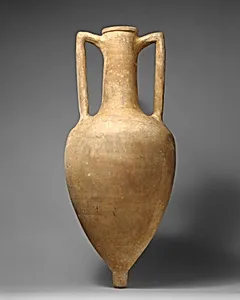
Terracotta transport amphora
Unknown Artist
late 3rd–mid-2nd century BCE
Medium
Terracotta
Dimensions
H. 31 15/16 in. (81.2 cm)
Classification
Vases
Culture & Period
Greek, Rhodian · Hellenistic
Department
Greek and Roman Art
Museum
Metropolitan Museum of Art, New York, NY
Credit
The Cesnola Collection, Purchased by subscription, 1874–76
Accession Number
74.51.357
Rights
Public Domain
Art Historical Context
This elegant terracotta transport amphora hails from the Hellenistic period, crafted on the island of Rhodes between the late 3rd and mid-2nd century BCE Standing at an impressive 31 15/16 inches (81.2 cm) tall, it exemplifies the practical yet refined pottery of ancient Greek maritime culture. Rhodes, a thriving hub of trade and commerce in the Aegean, produced these vessels in vast quantities to facilitate the export of goods like wine, olive oil, and other commodities across the Mediterranean. Amphorae like this one were wheel-thrown from high-quality terracotta clay, fired to achieve durability for long sea voyages. Their distinctive shape—narrow neck, bulging body, and sturdy foot with twin handles—allowed secure stacking in ship holds and easy pouring. Rhodian examples often bore stamped handles indicating origin and contents, underscoring Rhodes' pivotal role in Hellenistic trade networks that connected Greece, Egypt, and beyond. Today, this amphora graces the Metropolitan Museum of Art's Greek and Roman Art department, part of the renowned Cesnola Collection acquired in the 1870s. It offers a tangible glimpse into the daily economics and artistry of the ancient world, reminding us how everyday objects fueled the cultural exchanges of antiquity.