
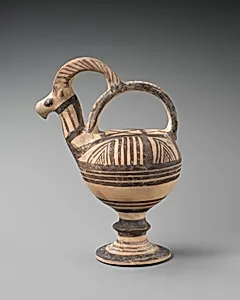
Terracotta trick vase
Unknown Artist
ca. 1050–950 BCE
Medium
Terracotta
Dimensions
H. 8 in. (20.3 cm)
Classification
Vases
Culture & Period
Cypriot · Cypro-Geometric I
Department
Greek and Roman Art
Museum
Metropolitan Museum of Art, New York, NY
Credit
The Cesnola Collection, Purchased by subscription, 1874–76
Accession Number
74.51.782
Rights
Public Domain
Tags
Art Historical Context
This charming terracotta trick vase, standing at 8 inches tall, hails from Cyprus around 1050–950 BCE, during the Cyproometric I period—an era marking the island's shift from the Bronze Age into early Iron Age traditions. Crafted by an unknown artist, it exemplifies Cypriot pottery's playful ingenuity, where "trick" vases were designed to deceive: liquid poured into one apparent spout emerges unexpectedly from another, often concealed within animal motifs like the goats suggested by its decoration. Fired from earthy terracotta clay, the vase features the geometric patterns and stylized animal figures typical of this period, replacing earlier narrative scenes with bold, abstract designs that conveyed status and ritual importance. These vessels likely served in funerary or domestic rituals, showcasing potters' technical skill in molding and firing to create functional yet whimsical objects. Acquired as part of The Cesnola Collection at the Metropolitan Museum of Art, this piece offers a window into Cyprus's vibrant ancient culture, blending everyday utility with clever artistry that delighted users over 3,000 years ago.