
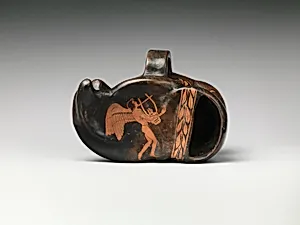
Terracotta vase in the form of an astragal (knucklebone)
ca. 460 BCE
Medium
Terracotta
Dimensions
H. 3 15/16 in. (10 cm); length 6 7/8 in. (17.4 cm); H. with handle 4 15/16 in. (12.6 cm)
Classification
Vases
Culture & Period
Greek, Attic · Classical
Department
Greek and Roman Art
Museum
Metropolitan Museum of Art, New York, NY
Credit
Harris Brisbane Dick Fund, 1940
Accession Number
40.11.22
Rights
Public Domain
Tags
Art Historical Context
This delightful terracotta vase, shaped an astragal—a sheep's knucklebone used in ancient Greek games of chance much like dice—offers a glimpse into the playful side of Classical Athenian life around 460 BCE. Crafted in Attic Greece during the height of the Classical period, its whimsical form (standing just under 5 inches tall with handle) mimics the gaming pieces tossed for entertainment at symposia and festivals. The Painter of London D 12, an anonymous master of red-figure pottery, adorned it with lively scenes featuring Eros, the god of love, alongside lyres, evoking music, desire, and revelry. Red-figure technique, where figures were left in the fired red clay against a black-gloss background, allowed for intricate details in anatomy, drapery, and expression—hallmarks of Attic innovation that influenced vase painting across the Mediterranean. This small vessel, likely used for perfume or ointment, highlights the Greeks' fusion of utility and artistry, turning everyday objects into storytelling canvases. Housed in the Metropolitan Museum of Art's Greek and Roman Art department (Harris Brisbane Dick Fund, 1940), it captures the era's cultural vibrancy: Eros with lyres symbolizes the harmony of love and music in mythology. A charming reminder that even ancient games held artistic allure!
About the Artist
Painter of London D 12
### Painter of London D 12 The Painter of London D 12 was an anonymous ancient Greek vase painter active in Attica during the late Archaic period, around 520–500 BCE. Named by the pioneering scholar Sir John Beazley after a specific black-figure hydria (water jar) in the British Museum's collection (inventory number D 12), this artist exemplifies the anonymous masters of Attic pottery workshops. ...