
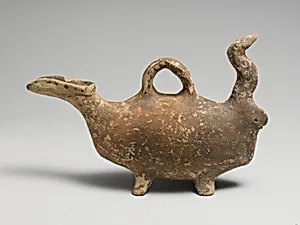
Terracotta zoomorphic askos (vessel)
Unknown Artist
ca. 2000–1800 BCE
Medium
Terracotta
Dimensions
H. 4 3/16 in. (10.6 cm)
Classification
Vases
Culture & Period
Cypriot · Early Cypriot III-Middle Cypriot I
Department
Greek and Roman Art
Museum
Metropolitan Museum of Art, New York, NY
Credit
The Cesnola Collection, Purchased by subscription, 1874–76
Accession Number
74.51.797
Rights
Public Domain
Tags
Art Historical Context
This charming terracotta zoomorphic ask, dating to around 2000–1800 BCE, hails from ancient Cyprus during the Early Cypriot III to Middle Cypriot I periods. Shaped like a small animal—likely a quadruped such as a goat or bull—this vessel stands just 4 3/16 inches (10.6 cm) tall, embodying the ingenuity of Bronze Age potters. As an askos, it features a distinctive baggy body with a spout for pouring liquids like oil or wine, a form popular across the ancient Mediterranean for both practical and ritual use. Crafted from fired clay, the askos showcases Cypriot artisans' skill in modeling naturalistic animal forms, a hallmark of the island's vibrant pottery tradition. Cyprus, a key maritime crossroads, thrived on trade and cultural exchange during this era, and such zoomorphic vases reflect everyday life intertwined with symbolic animal motifs, possibly evoking fertility or protection. Part of the renowned Cesnola Collection at The Metropolitan Museum of Art, acquired in the 1870s, it offers a window into a pre-Greek Cypriot world where humble terracotta vessels blended utility with artistic whimsy. Today, this diminutive treasure highlights how ancient Cypriots infused the mundane with the marvelous, bridging function and fantasy in their material culture.