
Textile
Unknown Artist
14th century
Medium
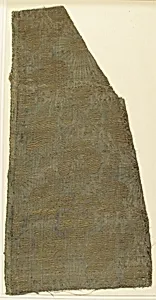
silk brocade, gold thread
Dimensions
Overall: 19 15/16 × 10 1/16 in. (50.7 × 25.5 cm) Storage (Mat with 07.243.5): 27 × 25 1/2 in. (68.6 × 64.8 cm)
Classification
Textiles-Woven-Brocade
Culture
Italian
Department
Medieval Art
Museum
Metropolitan Museum of Art, New York, NY
Credit
Rogers Fund, 1909
Accession Number
09.50.979
Rights
Public Domain
Tags
Art Historical Context
This exquisite 14th-century Italian brocade textile, featuring intricate bird motifs, exemplifies the opulence of Medieval European luxury fabrics. Woven during a time when Italy was a hub for silk production—thanks to trade routes from the East and burgeoning workshops in cities like Lucca and Venice—this piece likely served as a panel for ecclesiastical vestments, altar cloths, or high-status garments. Its modest size (about 20 by 10 inches) suggests it was part of a larger ensemble, now preserved at The Metropolitan Museum of Art, acquired through the Rogers Fund in 1909. The medium of silk brocade with gold thread highlights masterful weaving techniques. Brocade involves a supplementary weft that floats over the ground weave to create raised, shimmering patterns, with the gold threads adding a regal gleam that caught the light in dimly lit medieval churches or noble halls. Birds, common in Gothic decorative arts, symbolized spiritual themes like the soul's ascent or divine messengers, blending artistry with symbolism. As a window into 14th-century Italian craftsmanship, this textile reveals how wealth and piety intertwined, showcasing the skill of anonymous artisans whose work rivaled illuminated manuscripts in splendor. Visitors can appreciate its tactile richness up close, a testament to enduring medieval ingenuity.