
Textile
Unknown Artist
19th century
Dimensions
3 × 3 in. (7.6 × 7.6 cm)
Classification
Textiles-Woven
Culture
Japan
Department
Asian Art
Museum
Metropolitan Museum of Art, New York, NY
Credit
Rogers Fund, 1909
Accession Number
09.50.3391
Rights
Public Domain
Art Historical Context
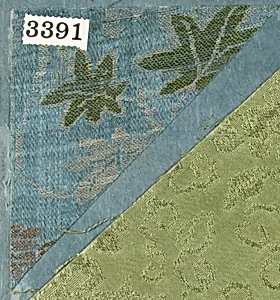
This delicate 3 × 3-inch woven textile from 19th-century Japan offers a glimpse into the refined artistry of the late Edo and early Meiji. Produced by an unknown artisan, it exemplifies the precision and skill inherent in Japanese textile traditions, where weaving was both a practical craft and a form of aesthetic expression. Acquired through the Rogers Fund in 1909 and now housed in the Metropolitan Museum Art's Asian Art Department, this small square likely served as a sample, patch, or accessory, highlighting the portability and versatility of such miniatures in everyday Japanese life. Woven textiles held profound cultural significance in Japan, symbolizing social status, seasonal motifs, and regional identities through intricate patterns and fibers like silk or cotton. The 19th century marked a time of transition, as Japan opened to Western influences post-1853, blending age-old techniques with emerging innovations. This piece, classified as a woven textile, invites us to appreciate the labor-intensive looms and resist-dye methods that produced Japan's renowned fabrics, from kimono cloth to ceremonial wraps. Though modest in scale, it captures the enduring elegance of a craft that wove beauty into the fabric of society.