
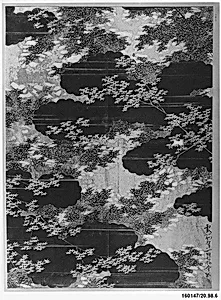
Textile Design for Stencil
Unknown Artist
17th century
Medium
Paint on paper
Dimensions
24 x 18 in. (60.96 x 45.72 cm)
Classification
Textiles-Methods and Materials
Culture
Japan
Department
Asian Art
Museum
Metropolitan Museum of Art, New York, NY
Credit
Rogers Fund, 1920
Accession Number
20.98.6
Rights
Public Domain
Tags
Art Historical Context
This delicate 17th-century *Textile Design for St* from Japan, painted on paper and measuring 24 x 18 inches, offers a glimpse into the artistry traditional fabric production. Housed in the Metropolitan Museum of Art's Asian Art Department (acquired through the Rogers Fund in 0), it belongs to the classification of Textiles—Methods and Materials. The design features plant motifs, a hallmark of Japanese aesthetics that celebrate nature's beauty and seasonal cycles. In Edo-period Japan (1603–1868), such stencil designs were essential precursors to katazome, a resist-dyeing technique used to create vibrant patterns on kimonos, noren curtains, and other textiles. Artists painted intricate motifs on sturdy paper, which craftsmen then meticulously cut into reusable stencils. This method allowed for precise, repeatable application of dyes, blending technical precision with artistic flair and enabling mass production of exquisitely patterned fabrics for everyday and ceremonial useToday, this anonymous work highlights Japan's enduring legacy in textile innovation, where everyday materials like paper became canvases for sophisticated design. Its plant imagery evokes the wabi-sabi appreciation for imperfection and transience, inviting visitors to ponder the hidden labor behind wearable art.