
Textile Fragment
Unknown Artist
17th century
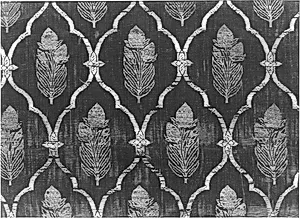
Medium
Silk and metal wrapped thread
Dimensions
L. 6 3/4 in. (17.1 cm) W. 9 1/2 in. (24.1 cm)
Classification
Textiles-Woven
Department
Islamic Art
Museum
Metropolitan Museum of Art, New York, NY
Credit
Gift of Stephen and Thomas Ettinghausen, in memory of Dr. Richard Ettinghausen and Dr. Elisabeth S. Ettinghausen, 2017
Accession Number
2017.692.8
Rights
Public Domain
Art Historical Context
This exquisite *Textile Fragment* from 17th century offers a glimpse into the opulent world of Islamic textile artistry. Woven from silk and metal-wrapped threads, this rectangular piece measures just 6 3/4 by 9 1/2 inches, likely a surviving portion of a larger garment, curtain, or ceremonial object. Housed in the Metropolitan Museum of Art's Islamic Department, it was generously gifted in 2017 memory of scholars Dr. Richard and Dr. Elisabeth S. Ettinghausen, highlighting its scholarly value. In the 17th century, during the height of empires like the Ottoman, Safavid, and Mughal, textiles were a pinnacle of luxury craftsmanship. Artisans masterfully wove silk warps with shimmering metal-wrapped wefts—often gold or silver threads wound around a core—to create brocaded patterns that caught the light, symbolizing wealth and divine splendor. These techniques demanded exceptional skill, blending functionality with aesthetic brilliance for elite patrons. Though the exact origin and design motifs remain unidentified, this fragment embodies the cultural prestige of Islamic weaving traditions, which influenced global trade and fashion. Visitors can appreciate how such delicate works preserved intricate cultural narratives across centuries.