
Textile Fragment
Unknown Artist
17th–18th century
Medium
Linen, silk; plain weave, embroidered
Dimensions
H. 48 1/4 in. (122.6 cm) W. 15 3/4 in. (40 cm)
Classification
Textiles-Embroidered
Department
Islamic Art
Museum
Metropolitan Museum of Art, New York, NY
Credit
Anonymous Gift, 1879
Accession Number
79.1.20
Rights
Public Domain
Art Historical Context
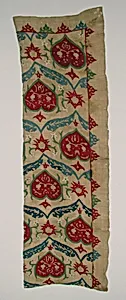
This exquisite *Textile Fragment* from the 17th–18th offers a glimpse into the masterful textile traditions of the Islamic world. Crafted from linen and silk using a plain weave foundation, it features intricate embroidery that highlights the period's renowned skill in fiber arts. Measuring an impressive 48¼ inches in height and 15¾ inches in width, this likely originated from a larger garment, curtain, or furnishing, reflecting the opulence of elite households or ceremonial contexts during the Ottoman or Safavid eras. The plain weave technique provided a sturdy, versatile base, while the silk embroidery added luxurious sheen and fine detail, techniques prized for their durability and aesthetic appeal in Islamic art. Such textiles were cultural treasures, symbolizing wealth, piety, and artisanal excellence—often produced in workshops where generations honed motifs inspired by nature, geometry, and script. Though the artist remains unknown, the work exemplifies the anonymous yet profound craftsmanship that defined Islamic decorative arts. Now part of the Metropolitan Museum of Art's Islamic Art Department, thanks to an anonymous gift in 1879, this fragment invites visitors to appreciate the tactile beauty and historical depth of a vanished world, where every stitch told a story of innovation and tradition.