
Textile Fragment
Unknown Artist
early 19th century
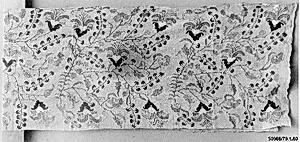
Medium
Linen, silk; plain weave, embroidered
Classification
Textiles
Department
Islamic Art
Museum
Metropolitan Museum of Art, New York, NY
Credit
Anonymous Gift, 1879
Accession Number
79.1.60a
Rights
Public Domain
Art Historical Context
This delicate *Textile Fragment* from the early 19th century exemplifies the exquisite craftsmanship of Islamic textile arts. Crafted from linen and silk using a plain weave foundation and intricate embroidery, it hails from a vibrant tradition where such fabrics adorned garments, furnishings, and ceremonial objects across the Islamic world—likely regions like the Ottoman Empire or Persia, where silk's luster symbolized luxury and status. The plain weave provided a sturdy, versatile base, allowing skilled artisans to layer fine embroidery with silk threads, creating patterns that might have featured floral motifs, geometric designs, or script—hallmarks of Islamic aesthetics that balanced beauty with spiritual symbolism. Embroidery techniques like couching or satin stitch highlighted the weavers' mastery, turning everyday materials into treasures that reflected cultural prosperity and piety during a time of imperial refinement. Acquired as an anonymous gift in 1879 and now housed in the Metropolitan Museum of Art's Islamic Art Department, this fragment invites us to appreciate the anonymous hands behind enduring artistry. Though small, it whispers stories of a world where textiles wove together art, faith, and daily life.