
Textile Fragment
Unknown Artist
early 19th century
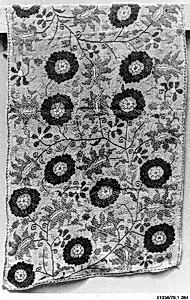
Medium
Linen, silk, metal wrapped thread; plain weave, embroidered
Dimensions
H. 38 in. (96.5 cm) W. 21 in. (53.3 cm)
Classification
Textiles-Embroidered
Department
Islamic Art
Museum
Metropolitan Museum of Art, New York, NY
Credit
Anonymous Gift, 1879
Accession Number
79.1.284
Rights
Public Domain
Tags
Art Historical Context
This exquisite *Textile Fragment* from the early 19th century offers a glimpse into the refined world of Islamic textile artistry. Housed in the Metropolitan Museum of Art's Islamic Art department, this generously sized piece—measuring 38 inches high by 21 inches wide—was acquired through an anonymous gift in 1879. Crafted on a plain weave linen foundation, it showcases masterful embroidery with silk threads and luxurious metal-wrapped threads, creating a shimmering, opulent surface. The floral motifs, a hallmark of Islamic decorative arts, likely draw from nature's abundance, symbolizing paradise gardens central to Islamic cosmology. Such embroideries were prized in garments, furnishings, or ceremonial textiles across the Ottoman Empire and beyond, blending functionality with spiritual elegance. The use of metal threads—often gold or silver—elevates the work, reflecting the era's technical sophistication and status as a luxury craft. Though the artist remains unknown, this fragment preserves the anonymous genius of Islamic workshops, where communal skill produced timeless beauty. Visitors can appreciate how these textiles wove stories of faith, nature, and artistry into everyday splendor.