
Textile Fragment
Unknown Artist
3rd–4th century
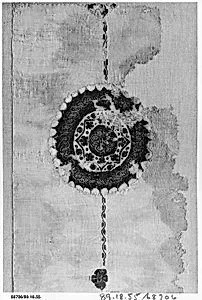
Medium
Wool, linen; plain weave, tapestry weave
Dimensions
H. 26 3/16 in. (66.5 cm) W. 15 3/4 in. (40 cm)
Classification
Textiles
Department
Islamic Art
Museum
Metropolitan Museum of Art, New York, NY
Credit
Purchase by subscription, 1889
Accession Number
89.18.55
Rights
Public Domain
Art Historical Context
This exquisite *Textile Fragment*, dating to the 3rd–4th century, a rare glimpse into the sophisticated textile arts of the Late Antique world. Crafted from wool and linen using plain weave for the foundation and tapestry weave for decorative elements, it measures an impressive 26 316 x 15 3/4 inches (66.5 x 40 cm). Tapestry weave, where colored weft threads are woven directly into the fabric to create patterns, was a labor-intensive technique prized for its durability and vivid designs, often used for garments, hangings, or liturgical cloths in regions like Egypt or the Near East. Housed in the Metropolitan Museum of Art's Department of Islamic Art and acquired through subscription purchase in 1889, this fragment highlights the cultural continuum between pre-Islamic and later Islamic traditions. Textiles from this era, preserved in arid climates, reveal advanced dyeing and weaving skills that influenced centuries of ornamental arts. Though the artist remains unknown, such pieces underscore the everyday artistry of ancient craftspeople, blending functionality with beauty in a time of cultural exchange across the Mediterranean and beyond. Visitors will appreciate how this survivor from nearly 1,700 years ago connects us to the tactile world of antiquity, where every thread told a story of skill and tradition.