
Textile Fragment
Unknown Artist
3rd–4th century
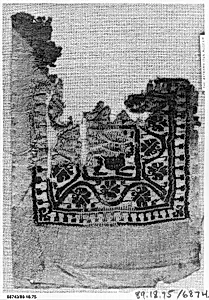
Medium
Wool, linen; plain weave, tapestry weave
Dimensions
Max. H. 8 3/8 in. (21.2 cm) Max. W. 5 1/2 in. (14 cm)
Classification
Textiles
Department
Islamic Art
Museum
Metropolitan Museum of Art, New York, NY
Credit
Purchase by subscription, 1889
Accession Number
89.18.75
Rights
Public Domain
Art Historical Context
This delicate textile fragment, dating to the 3rd–4th century, offers a rare glimpse into the daily artistry of late antique societies in the Near East or Egypt, regions later central to Islamic culture. Acquired by the Metropolitan Museum of Art through subscription purchase in 188, it resides in the Islamic Art department, highlighting the continuity of textile traditions across epochs. Measuring just 8 3/8 by 5 1/2 inches, such small survivals underscore the fragility of ancient fabrics, often preserved in arid tombs or archaeological sites. Crafted from wool and linen using plain weave for the ground and tapestry weave for decorative elements, the piece exemplifies sophisticated weaving techniques of the era. Plain weave provided a sturdy, breathable base ideal for garments or furnishings, while tapestry weave—where colored weft threads create patterns without floats—allowed for vibrant, pictorial designs. These methods were labor-intensive, reflecting skilled craftsmanship among weavers who blended functionality with aesthetic appeal. Culturally, this fragment reveals the vibrant textile production that influenced later Islamic arts, from Abbasid silks to Ottoman carpets. Though details of its motifs are not specified, it evokes a world where textiles were prized status symbols and storytelling mediums, bridging pagan antiquity to emerging monotheistic traditions. A testament to enduring human creativity, it invites us to marvel at threads that have whispered across millennia.