
Textile Fragment
Unknown Artist
3rd–4th century
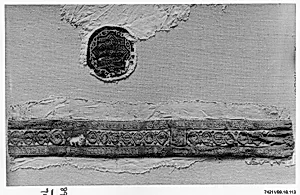
Medium
Wool, linen; plain weave, tapestry weave
Dimensions
H. 21 5/8 in. (55 cm) W. 2 3/4 in. (7 cm)
Classification
Textiles
Department
Islamic Art
Museum
Metropolitan Museum of Art, New York, NY
Credit
Purchase by subscription, 1889
Accession Number
89.18.113
Rights
Public Domain
Art Historical Context
This delicate *Textile Fragment* from the rd–4th century a glimpse into the vibrant of Late Antique textile production, likely originating from a region like Egypt where such narrow strips (just 2¾ inches wide and 21⅝ inches long) adorned garments such as tunics or cloaks. Crafted from wool and linen—staple fibers of the era—it combines plain weave for the sturdy ground fabric with tapestry weave for colorful, pictorial inserts, a technique that allowed weavers to create intricate motifs efficiently on portable looms. Housed in the Metropolitan Museum of Art's Islamic Art Department (acquired by subscription in 1889), this piece bridges pre-Islamic craftsmanship and later traditions. The 3rd–4th centuries marked a period of cultural fusion under Roman, Byzantine, and Sasanian influences, with textiles serving as everyday art, trade goods, and even mummy wrappings. Tapestry weaving, in particular, highlighted skilled labor in workshops, producing durable yet decorative panels that conveyed status and storytelling through patterns. Though the artist remains unknown, the fragment's survival underscores the ingenuity of ancient weavers, whose techniques laid groundwork for Islamic textile arts. A testament to fragile beauty enduring through millennia, it invites us to imagine the hands that wove it and the lives it once dressed.