
Textile Fragment
Unknown Artist
5th century
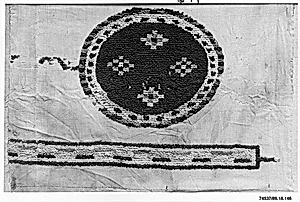
Medium
Wool, linen; plain weave, tapestry weave, weft loop weave
Dimensions
H. 26 3/8 in. (67 cm) W. 18 7/8 in. (48 cm)
Classification
Textiles
Department
Islamic Art
Museum
Metropolitan Museum of Art, New York, NY
Credit
Purchase by subscription, 1889
Accession Number
89.18.146
Rights
Public Domain
Art Historical Context
This exquisite *Textile Fragment* from the 5th century offers a glimpse into the sophisticated world of Late Antique weaving, housed in the Metropolitan Museum of Art's Islamic Art Department. Crafted wool and linen, it measures 26⅜ × 18⅞ inches (67 × 48 cm) and as a testament to anonymous artisans' skill. Acquired through a subscription purchase in 1889 it reflects the enduring value placed on such artifacts, bridging pre-Islamic craftsmanship with the cultural foundations of the Islamic world. The fragment showcases a masterful combination of techniques: plain weave for a sturdy base, tapestry weave for intricate pattern potential, and weft loop weave for textured loops that added depth and luxury. These methods, common in regions like Egypt or the Near East, highlight advanced textile production that served clothing, furnishings, and trade goods. Wool provided warmth and durability, while linen offered breathability, making such pieces practical yet artistic treasures. In the context of early Islamic art traditions, this fragment underscores textiles' cultural significance as symbols of wealth, piety, and technical prowess. Though details of its motifs are fragmented, it evokes the vibrant exchange along ancient Silk Road and Mediterranean routes, inviting us to appreciate the quiet genius of forgotten makers.