
Textile Fragment
Unknown Artist
3rd–4th century
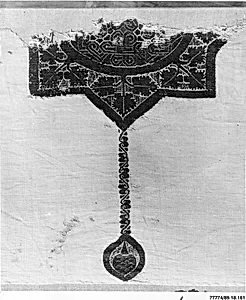
Medium
Wool, linen; plain weave, tapestry weave
Dimensions
H. 9 1/2 in. (24 cm) W. 13 3/4 in. (34.9 cm)
Classification
Textiles
Department
Islamic Art
Museum
Metropolitan Museum of Art, New York, NY
Credit
Purchase by subscription, 1889
Accession Number
89.18.181
Rights
Public Domain
Art Historical Context
This exquisite Textile Fragment, dating to the 3–4th century, a glimpse into the sophisticated textile traditions of the early Islamic world, likely originating from regions like Egypt or Near East. Housed in the Metropolitan Museum of Art's of Islamic Art, this yet precious survivor—measuring just 9½ by 13¾ inches—was acquired through a subscription purchase in 1889 Such fragments often come from garments, furnishings, or burial wrappings, preserving vibrant colors and patterns that have endured for over 1,600 years. Crafted from wool and linen, the piece masterfully combines plain weave—a simple, sturdy interlacing of warp and weft—for the ground fabric, with tapestry weave for decorative motifs. Tapestry technique, where the weft yarns completely cover the warp to create bold, pictorial designs, was a hallmark of Late Antique and early Islamic textiles. This method allowed artisans to depict motifs like animals, geometrics, or floral elements (though specifics here are fragmentary), reflecting cultural exchanges along ancient trade routes. As a testament to everyday artistry in a pre-industrial era, this fragment highlights the cultural importance of textiles in Islamic societies, where they symbolized status, piety, and craftsmanship. Visitors can marvel at how these humble materials wove stories of daily life into history's fabric.