
Textile Fragment
Unknown Artist
5th–6th century
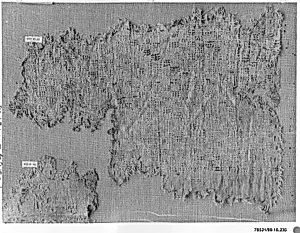
Medium
Wool, linen; plain weave, tapestry weave (?)
Dimensions
Max. H. 11 1/2 in. (29.2 cm) Max. W. 16 1/4 in. (41.3 cm)
Classification
Textiles
Department
Islamic Art
Museum
Metropolitan Museum of Art, New York, NY
Credit
Purchase by subscription, 1889
Accession Number
89.18.235
Rights
Public Domain
Art Historical Context
This delicate **Textile Fragment**, dating to the 5th–6th, invites us into the vibrant world of Late Antique textile production in the Eastern Mediterranean or Near East. Crafted wool and linen using plain weave with possible tapestry techniques, it measures a modest 11½ × 16¼ inches (29.2 × 41.3 cm). Now preserved in the Metropolitan Museum of's Department of Islamic Art—acquired by subscription in 1889—it exemplifies the everyday artistry of an unknown maker from a pivotal era bridging Byzantine, Sasanian, and pre-Islamic cultures. Textiles like this were cornerstones of ancient economies, traded along Silk Road routes and used for garments, hangings, and ritual purposes. The plain weave provided sturdy foundations, while tapestry weave (if present) allowed for intricate, pictorial designs—though time has softened their details. Such fragments reveal sophisticated dyeing and weaving skills, essential to societies where cloth symbolized wealth and status. Its survival offers precious insight into cultural exchanges that shaped early Islamic art, reminding us how humble materials wove the fabric of history. A quiet treasure for any visitor drawn to the threads of the past!