
Textile Fragment
Unknown Artist
3rd–4th century
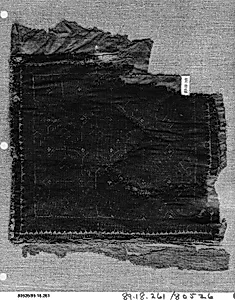
Medium
Wool, linen; plain weave, tapestry weave
Dimensions
Max. H. 9 3/4 in. (24.8 cm) Max. W. 9 3/4 in. (24.8 cm)
Classification
Textiles
Department
Islamic Art
Museum
Metropolitan Museum of Art, New York, NY
Credit
Purchase by subscription, 1889
Accession Number
89.18.261
Rights
Public Domain
Art Historical Context
This delicate textile fragment, dating to the 3rd–4th century, offers a glimpse into the sophisticated weaving traditions of the early Islamic world—or more precisely, its Late Antique precursors. Crafted from wool and linen using plain weave for the ground and tapestry weave for decorative elements, the square piece measures just under 10 inches on each side. Acquired by the Metropolitan Museum of Art in 1889 through public subscription, it exemplifies the's commitment to preserving everyday artistry from antiquity. Tapestry weave, a labor-intensive technique where colored weft yarns completely cover the warp, allowed weavers to create vibrant, pictorial motifs without relying on dyes alone. Though the specific designs on this fragment are not detailed here, such methods were prized for their durability and visual impact, often adorning garments, furnishings, or burial wrappings. In the Islamic Art department, this piece highlights the continuity of textile production from pre-Islamic Egypt or the Near East into later periods. These fragments remind us that textiles were cultural powerhouses—traded across empires, symbolizing status, and preserving stories through color and pattern. Though small, this survivor speaks volumes about ancient craftsmanship and the enduring allure of woven art.