
Textile Fragment
Unknown Artist
3rd–4th century
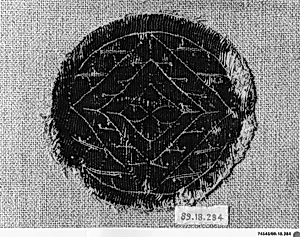
Medium
Wool, linen; plain weave, tapestry weave
Classification
Textiles
Department
Islamic Art
Museum
Metropolitan Museum of Art, New York, NY
Credit
Purchase by subscription, 1889
Accession Number
89.18.284
Rights
Public Domain
Art Historical Context
This exquisite textile fragment, dating to the 3rd–4th century, offers a rare glimpse into the artistry of early Islamic-era weaving. Crafted from wool and linen using plain weave for the foundation and tapestry weave for decorative elements, it exemplifies the sophisticated textile traditions of the Near East or Egypt during late antiquity. Acquired by the Metropolitan Museum of Art through a subscription purchase in 1889, it resides in the museum's Islamic Art department, highlighting its enduring cultural value. The plain weave provided a sturdy, practical base—ideal for garments, furnishings, or hangings—while the tapestry technique allowed weavers to create vibrant, discontinuous patterns by interweaving colored yarns directly into the fabric. This method, labor-intensive yet versatile, produced durable designs without supplementary wefts, showcasing the weavers' skill in color and motif integration. As a fragment, it preserves fragments of daily life from a pivotal era bridging classical antiquity and the rise of Islam. Such textiles were central to trade routes, social status, and ritual practices, reflecting advanced dyeing and spinning technologies. Though the artist remains unknown, this piece underscores the anonymous mastery that defined ancient textile production, inviting us to imagine the hands that wove it centuries ago.