
Textile Fragment
Unknown Artist
5th–6th century
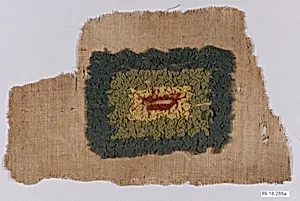
Medium
Wool, linen; plain weave, weft loop weave
Dimensions
Max. H. 5 5/8 in. (14.3 cm) Max. W. 4 3/16 in. (10.6 cm)
Classification
Textiles
Department
Islamic Art
Museum
Metropolitan Museum of Art, New York, NY
Credit
Purchase by subscription, 1889
Accession Number
89.18.285a
Rights
Public Domain
Art Historical Context
This exquisite textile fragment, dating to the 5th–6th century, a rare glimpse into the sophisticated weaving traditions of the late ancient world. Crafted from wool and linen using plain weave combined with weft loop weave it measures just 5⅝ × 4¼ inches, yet exemplifies the technical prowess of artisans in regions under early Islamic cultural influence, such as Egypt or the Near East. Acquired by the Metropolitan Museum of Art in 9 through subscription purchase, it resides in the Islamic Art department highlighting the continuity of textile arts across eras. The plain weave forms a sturdy foundation, while the weft loop technique—where extra weft threads create raised loops—adds texture and durability, possibly for upholstery, garments, or decorative hangings. Such methods were labor-intensive, reflecting skilled labor in workshops that produced textiles for trade along Silk Road routes and Mediterranean ports. In a time of cultural transition before the full rise of Islam, these fragments preserve everyday artistry, revealing how wool and linen were dyed, woven, and exported. They connect us to anonymous makers whose innovations influenced centuries of Islamic textile design, from tapestries to carpets, underscoring textiles' role as portable wealth and cultural expression.