
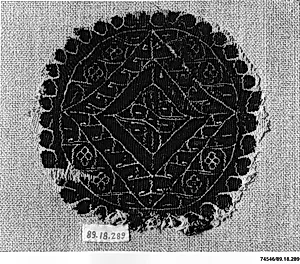
Textile Fragment
Unknown Artist
3rd–4th century
Medium
Wool, linen; tapestry weave
Classification
Textiles
Department
Islamic Art
Museum
Metropolitan Museum of Art, New York, NY
Credit
Purchase by subscription, 1889
Accession Number
89.18.289
Rights
Public Domain
Art Historical Context
This exquisite *Textile Fragment* from the 3rd–4th century showcases the mastery of ancient weavers using wool and linen in a weave technique. In tapestry weave, colored wefts are inserted only where needed, allowing for vibrant, detailed patterns without wasting precious dyed threads—a labor-intensive method that speaks to the high level of craftsmanship in Late Antique textile production. Likely originating from Egypt or the Eastern Mediterranean, such fragments were prized for garments, furnishings or ceremonial uses. Housed in the Metropolitan Museum of Art's Islamic Department (acquired by subscription in 1889), this piece bridges pre-Islamic Late Antiquity and later Islamic traditions. During the 3rd–4th centuries, under Roman and Byzantine influences, textiles like this flourished as symbols of wealth and cultural exchange along trade routes. The survival of such delicate artifacts offers rare insights into everyday artistry, color symbolism, and weaving innovations that influenced centuries of textile design across the Islamic world. Though the artist remains unknown, the fragment's preservation highlights the enduring allure of these ancient fabrics, reminding us how textiles wove together history, commerce, and creativity.