
Textile Fragment
Unknown Artist
6th–7th century
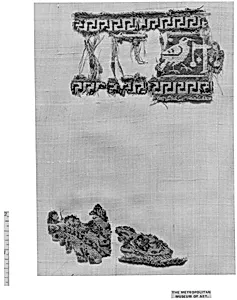
Medium
Silk: double weave (?)
Dimensions
H. 18 1/2 in. (47 cm) W. 13/16 in. (2 cm)
Classification
Textiles
Department
Islamic Art
Museum
Metropolitan Museum of Art, New York, NY
Credit
Gift of George F. Baker, 1890
Accession Number
90.5.1b
Rights
Public Domain
Tags
Art Historical Context
This exquisite *Textile Fragment* from the 6th–7th century offers a tantalizing glimpse into the opulent world of early silk production. Crafted from silk in a possible double weave technique—a sophisticated method that interlaces two layers of fabric simultaneously for intricate, potentially reversible patterns—this narrow strip measures just 18½ inches long and a mere 13/16 inch wide. Adorned with motifs of birds, it exemplifies the fine textiles produced during a pivotal era bridging late antiquity and the dawn of Islam. Housed in the Metropolitan Museum of Art's Department of Islamic Art, this fragment likely originated from regions along ancient trade routes, such as Central Asia or the Sasanian Empire, where silk weaving flourished. The bird imagery, a common symbol of grace and the natural world in early Islamic and pre-Islamic art, highlights the cultural exchange facilitated by the Silk Road. Double weave, if confirmed, underscores the technical mastery of anonymous artisans, who created luxurious goods for elite patrons. Gifted to the Met in 1890 by George F. Baker, this rare survivor speaks to the fragility and value of ancient textiles. It invites us to marvel at the enduring legacy of craftsmanship that connected distant civilizations through beauty and commerce.