
Textile Fragment
Unknown Artist
6th–7th century
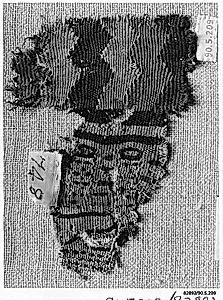
Medium
Wool, linen; tapestry weave
Dimensions
Max. H. 3 15/16 in. (10 cm) Max. W. 2 11/16 in. (6.9 cm)
Classification
Textiles
Department
Islamic Art
Museum
Metropolitan Museum of Art, New York, NY
Credit
Gift of George F. Baker, 1890
Accession Number
90.5.209
Rights
Public Domain
Art Historical Context
This exquisite textile fragment from the 6th–7th century invites us into the world of early Islamic craftsmanship. Measuring a modest 3 15/16 inches high by 2 11/16 inches wide, it was woven from wool and linen using the tapestry technique—a method where discontinuous weft threads of different colors interlace directly with the warp to create vivid patterns without waste or floats. Now treasured in the Metropolitan Museum of Art's Department of Islamic Art, it entered the collection as a gift from George F. Baker in 1890. Dating to a pivotal era bridging Late Antiquity and the rise of Islam, such fragments often survived from garments, cushions, or hangings in regions like Egypt or the Near East. The tapestry weave exemplifies technical mastery, allowing intricate designs on a tiny scale and reflecting advanced textile traditions that thrived amid cultural exchanges along trade routes. Though the artist is unknown, this piece highlights textiles' vital role in Islamic culture: practical yet artistic objects that adorned daily life and conveyed status. Its survival offers a rare window into perishable arts, preserving echoes of a vibrant, interconnected world.