
Textile Fragment
Unknown Artist
4th–5th century
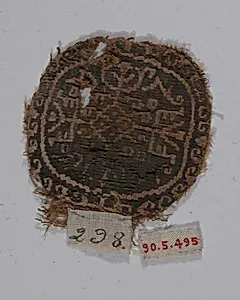
Medium
Wool, linen; tapestry weave
Classification
Textiles
Department
Islamic Art
Museum
Metropolitan Museum of Art, New York, NY
Credit
Gift of George F. Baker, 1890
Accession Number
90.5.495
Rights
Public Domain
Art Historical Context
This exquisite *Textile Fragment* from the 4th–5th century offers a glimpse into the masterful textile traditions of Late Antiquity. Crafted from wool and linen using tapestry weave—a technique where colored weft yarns are woven discontinuously to form intricate patterns floating threads—this fragment exemplifies the technical sophistication of ancient weavers. Tapestry weave allowed for vibrant, detailed motifs that were both durable and visually striking, making it ideal for garments, furnishings, and trade goods across the Mediterranean and Near East. Housed in the Metropolitan Museum Art's Department of Islamic Art, this piece reflects the cultural continuum between pre-Islamic and later Islamic textile arts. During the 4th–5th centuries, such fragments were likely produced in regions like Egypt or Syria, hubs of textile innovation influenced by Roman, Byzantine, and local traditions. Wool provided warmth and dye affinity, while linen added strength, highlighting the practical artistry of the era. A generous gift from George F. Baker in 1890, this survivor of time invites us to appreciate how textiles served as canvases for storytelling and status. Though details of its exact design remain unrecorded here, its preservation underscores the enduring allure of these early woven treasures.