
Textile Fragment
Unknown Artist
5th–6th century
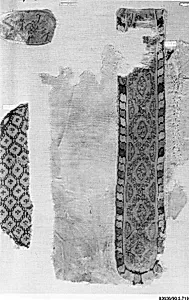
Medium
Wool, linen; plain weave, tapestry weave
Dimensions
Max. H. 18 15/16 in. (48.1 cm) Max. W. 9 13/16 in. (25 cm)
Classification
Textiles
Department
Islamic Art
Museum
Metropolitan Museum of Art, New York, NY
Credit
Gift of George F. Baker, 1890
Accession Number
90.5.719
Rights
Public Domain
Art Historical Context
This exquisite *Textile Fragment* from the 5th–6th century offers a rare glimpse into the early world of Islamic art. Crafted from wool and linen using plain weave for the foundation and tapestry weave for decorative elements, it measures a modest 18 15/16 inches high by 9 13/16 inches wide. Such techniques highlight the sophisticated textile production of the era, where weavers combined durability with intricate patterning, likely for garments, furnishings, or ceremonial use. Dating to a pivotal transitional period—late antiquity into the dawn of Islam—this fragment reflects the vibrant craftsmanship of regions under emerging Islamic influence, such as Egypt or the Near East. Tapestry weave, in particular, allowed for bold colors and motifs woven directly into the fabric, a labor-intensive method that speaks to the high value placed on textiles in daily life and trade. Generously donated to the Metropolitan Museum of Art in 1890 by George F. Baker, this piece endures as a testament to ancient artistry. Though incomplete, it invites us to imagine the skilled hands behind it, preserving cultural threads across millennia in the museum's Islamic Art collection.