
Textile Fragment
Unknown Artist
5th–6th century
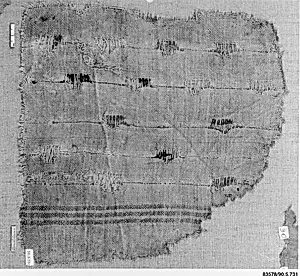
Medium
Wool, linen; plain weave, tapestry weave
Dimensions
Max. H. 11 7/16 in. (29 cm) Max. W. 10 13/16 in. (27.5 cm)
Classification
Textiles
Department
Islamic Art
Museum
Metropolitan Museum of Art, New York, NY
Credit
Gift of George F. Baker, 1890
Accession Number
90.5.731
Rights
Public Domain
Art Historical Context
This exquisite *Textile Fragment* from 5th–6th century offers a glimpse into the vibrant world of Late Antique craftsmanship, housed in the Metropolitan Museum of Art's Islamic Art. Crafted from wool and linen using plain weave for the foundation and tapestry weave for decorative motifs, it measures just 11 7/16 x 10 13/16 inches (29 x 27.5 cm). Such small survivals are precious, as organic materials like textiles rarely endure from this era, likely originating from regions like Egypt or the Near East where weaving flourished amid Byzantine and pre-Islamic influences. The dual weaving techniques highlight skilled artistry: plain weave provided a sturdy tabby structure, while tapestry weave allowed artisans to create intricate, discontinuous patterns by interweaving colored yarns. Wool offered durability and rich dyes, linen breathability—ideal for garments, furnishings, or ritual cloths. These methods underscore the technical sophistication of early textile production, bridging ancient traditions into the emerging Islamic world. A generous gift from George F. Baker in 1890, this fragment reveals cultural exchanges along ancient trade routes, evoking the colors and patterns that adorned daily life over 1,500 years ago. Pause and imagine its original splendor!