
Textile Fragment
Unknown Artist
6th–7th century
Medium
Wool, linen; plain weave, tapestry weave
Dimensions
Max. H. 15 15/16 in. (40.5 cm) Max. W. 12 in. (30.5 cm)
Classification
Textiles
Department
Islamic Art
Museum
Metropolitan Museum of Art, New York, NY
Credit
Gift of George F. Baker, 1890
Accession Number
90.5.735
Rights
Public Domain
Art Historical Context
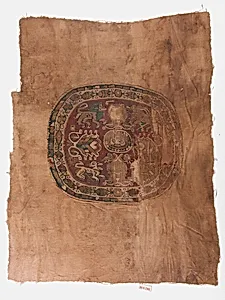
This exquisite *Textile Fragment* from the 6th–7th offers a glimpse into the sophisticated world of early textile production in the Islamic world. Crafted from wool and linen using plain weave for the foundation and tapestry weave for decorative elements, it exemplifies the technical mastery of ancient weavers. Measuring just 15 15/16 inches high by 12 inches wide, this small survivor hints at larger garments, furnishings, or ceremonial cloths that adorned daily life and rituals. Tapestry weave, a labor-intensive technique where colored weft threads create pictorial designs without floats, allowed for vibrant patterns and motifs that conveyed cultural stories or symbols. In the context of the Islamic Art department at the Metropolitan Museum of Art, such fragments highlight the transition from late antique traditions to early Islamic aesthetics, showcasing influences from Egypt, Syria, or Central Asia through trade routes like the Silk Road. A generous gift from George F. Baker in 1890, this piece underscores the enduring allure of textiles as portable art forms. They preserved dyes from natural sources, reflected social status, and bridged cultures, inviting us to imagine the hands that wove them centuries ago.