
Textile Fragment
Unknown Artist
3rd–4th century
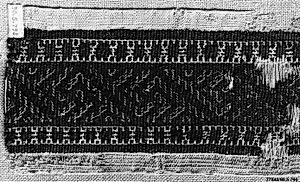
Medium
Wool, linen; plain weave, tapestry weave
Dimensions
Max. H. 8 13/16 in. (22.4 cm) Max. W. 2 5/8 in. (6.7 cm)
Classification
Textiles
Department
Islamic Art
Museum
Metropolitan Museum of Art, New York, NY
Credit
Gift of George F. Baker, 1890
Accession Number
90.5.798
Rights
Public Domain
Art Historical Context
This exquisite textile fragment, dating to the 3rd–4th century, offers a rare glimpse into the sophisticated weaving traditions of the ancient Near East or Egypt during the Late Antique period. Crafted from wool and linen using plain weave for the ground and tapestry weave for decorative elements, it exemplifies the technical mastery of early textile artisans. Though small—measuring just 8⅞ inches high by 2⅝ inches wide—this fragment survives as a testament to perishable materials that rarely endure, highlighting the challenges of preserving ancient fabrics. Housed in the Metropolitan Museum of Art's Department of Islamic Art, the piece reflects cultural continuities in the region that would later flourish under Islamic rule. Tapestry weave, where colored weft yarns create motifs without a visible ground, allowed for vibrant patterns symbolizing status, trade, or daily life. Donated in 1890 by George F. Baker, it underscores early collecting efforts that bridged antiquity and modern appreciation. For visitors, this fragment evokes the tactile world of ancient makers—hands dyeing wool with natural pigments, looms humming in bustling workshops—reminding us how textiles wove together economies, religions, and aesthetics across millennia.