
Textile Fragment
Unknown Artist
10th–11th century
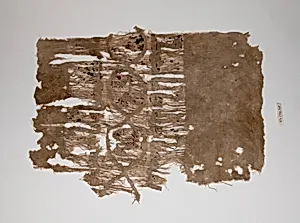
Medium
Cotton and silk
Dimensions
L. 13 1/2 in. (34.3 cm) W. 9 in. (22.9 cm)
Classification
Textiles-Woven
Department
Islamic Art
Museum
Metropolitan Museum of Art, New York, NY
Credit
Rogers Fund, 1927
Accession Number
27.170.35
Rights
Public Domain
Art Historical Context
This exquisite *Textile Fragment* from the 10th–11th century offers a glimpse into the opulent world of Islamic textile production during the medieval Islamic Golden Age. Likely originating from regions like Egypt or Central Asia under Abbasid or Fatimid patronage, such fragments were prized for their intricate designs and served practical yet luxurious purposes—adorning garments, turbans, or ceremonial hangings. Woven in cotton and silk, this measures a modest 13½ by 9 inches, yet it embodies the era's mastery of loom-based artistry, where textiles rivaled metalwork and ceramics in prestige. The combination of cotton (abundant and versatile) and silk (a symbol of wealth, often imported via the Silk Road) highlights advanced weaving techniques, such as weft-faced patterns or supplementary wefts, common in Islamic workshops. These methods allowed for vibrant motifs—geometric, floral, or epigraphic—that conveyed cultural and religious significance, blending artistry with spirituality. Today, housed in The Metropolitan Museum of Art's Islamic Art Department (Rogers Fund, 1927), this survivor reminds us how fragile textiles preserve history. Though incomplete, it invites us to imagine the skilled hands and bustling markets that created it, a testament to Islam's enduring textile legacy.