
Textile Fragment
Unknown Artist
16th century
Medium
Silk and metal wrapped thread; brocaded
Dimensions
H. 10 in. (25.4 cm) W. 5 in. (12.7 cm)
Classification
Textiles-Woven
Department
Islamic Art
Museum
Metropolitan Museum of Art, New York, NY
Credit
Gift of Abby Aldrich Rockefeller, 1938
Accession Number
38.112.1c
Rights
Public Domain
Tags
Art Historical Context
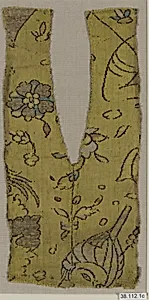
This delicate textile fragment, dating to the 16th, exemplifies the opulent craftsmanship of Islamic weaving traditions. Crafted from silk yarns supplemented with shimmering metal-wrapped threads, employs the brocading technique—a labor-intensive method where extra wefts are woven into the ground fabric to form raised, ornate motifs. Measuring just 10 by 5 inches, this small swatch likely originated from a larger garment, curtain, or ceremonial textile, highlighting the portability and prestige of such luxury goods across the Islamic world, from Safavid Persia to the Ottoman Empire. The design features intricate faces and flowers, common motifs in secular Islamic textiles that blend natural beauty with subtle human elements. While Islamic art often favored abstraction, these representational patterns reflect a vibrant courtly aesthetic, evoking gardens of paradise or portraits of beauty. The metallic threads catch the light, adding a jewel-like sparkle that would have dazzled in lamplit palaces. A generous gift to the Metropolitan Museum of Art from Abby Aldrich Rockefeller in 1938, this fragment invites us to marvel at the anonymous artisans whose skill preserved cultural splendor through centuries. It reminds visitors of the Islamic world's pivotal role in textile innovation, influencing global trade and fashion.