
Textile Fragment
Unknown Artist
5th century
Medium
Wool
Dimensions
L. 4 1/2 in. (11.4 cm) W. 3 3/8 in. (8.6 cm)
Classification
Textiles
Department
Islamic Art
Museum
Metropolitan Museum of Art, New York, NY
Credit
Gift of Albert Eugene Gallatin, 1965
Accession Number
65.24.3
Rights
Public Domain
Tags
Art Historical Context
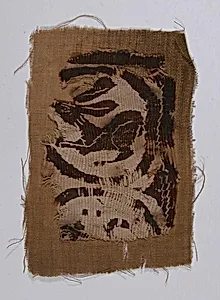
This exquisite wool textile fragment, dating to the 5th, invites visitors to marvel at a tiny window into early textile artistry from the Islamic world. Measuring a modest 4½ by 3⅜ inches (11.4 × 8.6 cm), it features delicate motifs of rabbits, woven with precision that speaks to the era's skilled craftsmanship. Housed in the Metropolitan Museum of Art's Department Islamic Art and gifted by Albert Eugene Gallatin in1965, it exemplifies classification of ancient textiles as vital cultural artifacts. Wool, a resilient and widely available medium, was central to pre-Islamic and early Islamic societies across regions like Persia, Central Asia, or Egypt, where such fragments likely adorned clothing, tents, or ceremonial items. The rabbit motifs—playful yet symbolic—reflect common animal patterns in these traditions, possibly evoking fertility, agility, or the natural world, and hint at influences from Sassanian or nomadic weaving styles. Though small, this fragment underscores the historical significance of textiles in trade networks like the Silk Road, preserving techniques such as tapestry weaving or resist dyeing that connected distant cultures. A rare survivor from antiquity, it reminds us how everyday artistry wove the fabric of ancient life.