
Textile Fragment
Unknown Artist
17th century
Medium
Silk, metal thread
Dimensions
H. 11 1/4 in. (28.6 cm) W. 4 1/2 in. (11.4 cm)
Classification
Textiles
Department
Islamic Art
Museum
Metropolitan Museum of Art, New York, NY
Credit
Gift of Nanette B. Kelekian, in honor of Olga Raggio, 2002
Accession Number
2002.494.667
Rights
Public Domain
Art Historical Context
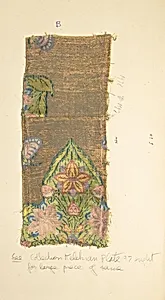
This exquisite *Textile Fragment* from the th century offers a glimpse into the opulent world of Islamic art. Crafted from silk woven with shimmering metal threads, this narrow strip measures just 11¼ inches high by 4½ inches wide suggesting it once formed part of a larger garment, furnishing, or ceremonial object. Such fragments are treasures preserved from the lavish textile traditions of the Islamic world, where silk—prized for its luster and drape—was often combined with gold or silver metal threads to evoke wealth and divine splendor. In the 17th century, during the height of empires like the Ottoman, Safavid, and Mughal, textiles were a pinnacle of artistic achievement. Weavers employed complex techniques, such as lampas weaving or brocading, to integrate metal threads seamlessly into silk grounds, creating intricate patterns that caught the light. These pieces symbolized status and piety, adorning mosques, palaces, and elite wardrobes. Though the artist remains unknown, the fragment's survival highlights the enduring fragility and value of these crafts. Now in the Metropolitan Museum of Art's Islamic Art Department, this gift from Nanette B. Kelekian in honor of Olga Raggio invites us to marvel at the ingenuity of anonymous artisans whose work bridged utility and beauty across centuries.