
Textile Fragment
Unknown Artist
17th century
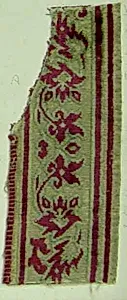
Medium
Silk, metal thread
Dimensions
H. 11 1/4 in. (28.6 cm) W. 4 3/4 in. (12.1 cm)
Classification
Textiles
Department
Islamic Art
Museum
Metropolitan Museum of Art, New York, NY
Credit
Gift of Nanette B. Kelekian, in honor of Olga Raggio, 2002
Accession Number
2002.494.686
Rights
Public Domain
Art Historical Context
This exquisite *Textile Fragment* from the th century offers a glimpse into the lavish world of Islamic art, crafted from shimmering silk woven with metal threads—likely gold or silver—for a luxurious, reflective sheen. Measuring just 11¼ by 4¾ inches, this small surviving piece belongs to the Metropolitan Museum of Art's Islamic Art Department gifted in 2002 by Nanette. Kelekian in of Olga Raggio. textiles were prized across the Islamic world, from the Ottoman Empire to Safavid Persia and Mughal India, where they adorned elite garments, turbans, or ceremonial hangings. The use of silk and metal threads exemplifies advanced weaving techniques of the era, such as lampas or brocading, which allowed artisans to create intricate, durable patterns that caught the light. These materials symbolized wealth and status, often reserved for courtly or religious contexts, blending functionality with artistry. Though the full design is lost to time, the fragment's preservation highlights the fragility and rarity of such works, which were laboriously produced by skilled workshops. Today, it invites us to appreciate the cultural splendor of 17th-century Islamic craftsmanship, where every thread wove stories of innovation and elegance.