
Textile Fragment
Unknown Artist
17th–18th century
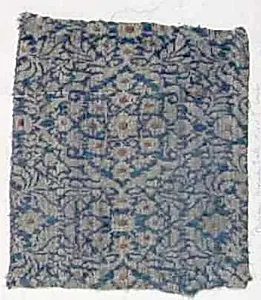
Medium
Silk
Dimensions
H. 6 1/4 in. (15.9 cm) W. 7 in. (17.8 cm)
Classification
Textiles
Department
Islamic Art
Museum
Metropolitan Museum of Art, New York, NY
Credit
Gift of Nanette B. Kelekian, in honor of Olga Raggio, 2002
Accession Number
2002.494.718
Rights
Public Domain
Art Historical Context
This exquisite silk textile fragment, dating to the 17th–18th century, hails from the rich tradition of Islamic art. Measuring just 6¼ by 7 inches, it exemplifies the delicate craftsmanship of the, when silk weaving flourished across regions like the Ottoman Empire,avid Persia, and Mughal. As a luxury material, silk was prized for its luster and durability, often reserved for elite garments, turbans, ceremonial robes, or opulent that signified wealth and status. Islamic textile artists mastered complex techniques such as lampas weaving or brocading, layering silk wefts with metallic threads to create shimmering patterns of florals, arabesques, and geometric motifs—hallmarks of the era's aesthetic that blended artistry with spiritual symbolism. Though the precise origin and design details of this fragment remain unidentified, it reflects the interconnected trade networks of the Silk Road, where such pieces were exported far and wide, influencing global fashion and design. Today, preserved at The Metropolitan Museum of Art through the generous gift of Nanette B. Kelekian in honor of Olga Raggio (2002), this fragment invites us to marvel at the anonymous genius behind Islamic textiles. It reminds visitors of how everyday luxuries once wove stories of culture, commerce, and creativity into the fabric of history.