
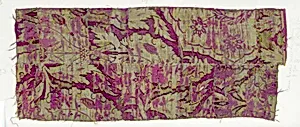
Textile Fragment
Unknown Artist
16th–17th century
Medium
Silk, metal thread
Dimensions
H. 20 1/2 in. (52.1 cm) W. 8 5/8 in. (21.9 cm)
Classification
Textiles
Department
Islamic Art
Museum
Metropolitan Museum of Art, New York, NY
Credit
Gift of Nanette B. Kelekian, in honor of Olga Raggio, 2002
Accession Number
2002.494.749
Rights
Public Domain
Art Historical Context
This exquisite *Textile Fragment* from the th–17th century a glimpse into the opulent world of Islamic art. Crafted from luxurious silk woven with shimmering metal threads—likely gold or silver—its elongated form (20½ × 8⅝ inches) suggests it once adorned garments, furnishings, or ceremonial objects in a prosperous Islamic court or household. Such textiles were prized symbols of wealth and status, reflecting the era's mastery in blending natural and metallic fibers for dazzling visual effects. The use of metal-thread weaving techniques, common in Ottoman, Safavid, or Mughal workshops, highlights the technical sophistication of Islamic artisans. These methods involved couching or brocading fine metal strips onto silk warps, creating intricate patterns that caught the light and conveyed motifs of flora, geometry, or script—hallmarks of Islamic design that emphasized harmony and infinity. Though the artist remains unknown, the fragment's survival speaks to the enduring allure of these crafts. Now housed in the Metropolitan Museum of Art's Department of Islamic Art, thanks to a 2002 gift from Nanette B. Kelekian honoring Olga Raggio, this piece invites us to marvel at the ingenuity behind everyday luxury in the early modern Islamic world.