
Textile Fragment
Unknown Artist
17th–18th century
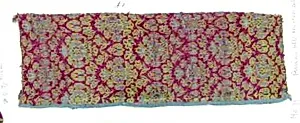
Medium
Silk
Dimensions
H. 10 in. (25.4 cm) W. 3 1/2 in. (8.9 cm)
Classification
Textiles
Department
Islamic Art
Museum
Metropolitan Museum of Art, New York, NY
Credit
Gift of Nanette B. Kelekian, in honor of Olga Raggio, 2002
Accession Number
2002.494.763
Rights
Public Domain
Art Historical Context
This exquisite silk textile fragment, dating to the 17th–18th century, offers a tantalizing glimpse into the opulent world of Islamic art. Measuring just 10 inches high by 3½ inches wide, its delicate scale belies the masterful craftsmanship of its unknown creator. Housed in the Metropolitan Museum of Art's Islamic Art, it exemplifies the refined textiles produced across the Islamic world during this era, when empires like the Ottoman, Safavid, Mughal fostered unparalleled weaving traditions. Silk, a luxurious medium prized for its luster and durability, held profound cultural significance in Islamic societies. Often sourced from trade routes like the Silk Road, it was reserved for elite garments, furnishings, and ceremonial objects, symbolizing wealth, status, and piety. The fragment's survival highlights the technical sophistication of period techniques, such as fine spinning and dyeing, which allowed for intricate patterns that blended functionality with artistry—though wear has left its designs evocatively faded. Generously gifted to the Met in 2002 by Nanette B. Kelekian in honor of curator Olga Raggio, this piece invites us to ponder the hands that wove it centuries ago. Such fragments preserve the ephemeral beauty of Islamic textiles, connecting us to a vibrant heritage of innovation and elegance.