
Textile Fragment
Unknown Artist
16th–17th century
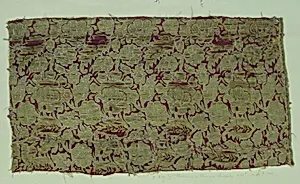
Medium
Silk, metal thread
Dimensions
H. 11 1/4 in. (28.6 cm) W. 20 in. (50.8 cm)
Classification
Textiles
Department
Islamic Art
Museum
Metropolitan Museum of Art, New York, NY
Credit
Gift of Nanette B. Kelekian, in honor of Olga Raggio, 2002
Accession Number
2002.494.796
Rights
Public Domain
Tags
Art Historical Context
This exquisite *Textile Fragment* from the 16th–17th offers a glimpse into the opulent world of Islamic art. Housed in the Metropolitan Museum of Art's Department of Islamic Art, this silk piece adorned with metal threads measures 11¼ by 20 inches. Though created by an unknown artist, it exemplifies the masterful textile traditions of the Islamic world, likely from regions like the Ottoman Empire oravid Persia, where such fabrics graced royal garments, ceremonial robes, and luxurious furnishings. The use of silk, prized for its luster and drape, combined with shimmering metal threads—often gold or silver—created a sumptuous effect through techniques like lampas weaving or couching. Delicate floral motifs, a hallmark tag of this fragment, bloom across its surface, symbolizing paradise gardens in Islamic culture. These intricate patterns not only showcased technical virtuosity but also reflected a deep appreciation for nature's beauty, evoking spiritual harmony. As a generous gift from Nanette B. Kelekian in honor of Olga Raggio in 2002, this fragment highlights the enduring allure of Islamic textiles. Surviving fragments like this are rare treasures, preserving the artistry of a golden age when weavers blended innovation with reverence for beauty.