
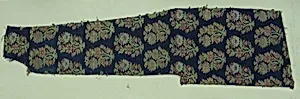
Textile Fragment
Unknown Artist
17th–18th century
Medium
Silk, metal thread
Dimensions
H. 23 in. (58.4 cm) W. 6 1/4 in. (15.9 cm)
Classification
Textiles
Department
Islamic Art
Museum
Metropolitan Museum of Art, New York, NY
Credit
Gift of Nanette B. Kelekian, in honor of Olga Raggio, 2002
Accession Number
2002.494.815
Rights
Public Domain
Art Historical Context
This delicate **Textile Fragment**, dating to the 17th–18th century, offers a glimpse into the refined artistry of Islamic textile production. Crafted from sumptuous silk interwoven with gleaming metal threads—likely gold or silver—it stands 23 inches tall and just over 6 inches wide. Now part of the Metropolitan Museum of's Islamic Art Department, this piece was generously gifted in 2002 by Nanette B. Kelekian in honor Olga Raggio. During this period, Islamic workshops across empires like the Ottoman, Safavid, and Mughal realms excelled in luxurious textiles, using advanced weaving techniques such as lampas or brocading to embed metal threads for a radiant, jewel-like effect. These materials not only enhanced durability but also symbolized wealth and prestige, adorning elite garments, turbans, or ceremonial hangings. As a surviving fragment, it whispers of larger, vibrant compositions filled with intricate motifs, underscoring textiles' cultural role in Islamic societies as both functional art and status symbols. A testament to enduring craftsmanship, it invites us to marvel at the weavers' skill and the splendor of a bygone era.