
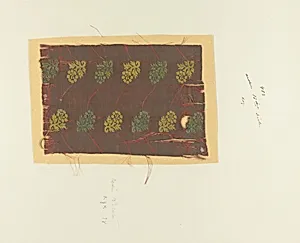
Textile Fragment
Unknown Artist
17th century
Dimensions
H. 7 in. (17.8 cm) W. 10 1/2 in. (26.7 cm)
Classification
Textiles
Department
Islamic Art
Museum
Metropolitan Museum of Art, New York, NY
Credit
Gift of Nanette B. Kelekian, in honor of Olga Raggio, 2002
Accession Number
2002.494.822
Rights
Public Domain
Tags
Art Historical Context
This delicate textile fragment from the 17th century a glimpse into the opulent world of Islamic art, where textiles were prized as symbols of wealth, status, and artistry. Housed in the Metropolitan Museum of Art's Department Islamic Art, this small piece—measuring just 7 by 10½ inches—likely originated from a larger garment, curtain, or furnishing in regions like the Ottoman Empire, Safavid Persia, or India. Floral motifs, as seen here, were ubiquitous in Islamic design, evoking the paradisiacal gardens of the Quran and showcasing nature's beauty through stylized blooms and vines. Crafted by an unknown artist, the fragment exemplifies the masterful techniques of Islamic textile production, such as intricate weaving, embroidery, or lampas weaves that interlace silk, wool, or metallic threads for shimmering effects. These methods not only ensured durability but also allowed for vibrant colors and patterns that adorned royal courts and mosques. Surviving fragments like this are rare treasures, preserved through careful museum stewardship—here, a generous gift from Nanette B. Kelekian in honor of Olga Raggio in 2002. For visitors, this piece whispers of a vibrant cultural heritage, where every thread told a story of innovation and devotion, inviting us to imagine the hands that wove it centuries ago.