
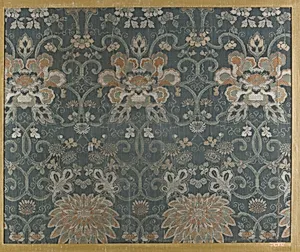
Textile fragment with repeating pattern of chrysanthemums and peonies in floral arabesque
Unknown Artist
18th–19th century
Medium
Silk
Dimensions
13 x 10 1/2 in. (33.02 x 26.67 cm)
Classification
Textiles-Woven
Culture & Period
Japan · Edo (1615–1868)
Department
Asian Art
Museum
Metropolitan Museum of Art, New York, NY
Credit
Gift of Mr. and Mrs. H. O. Havemeyer, 1896
Accession Number
96.14.174
Rights
Public Domain
Tags
Art Historical Context
This exquisite silk textile fragment from 18th–19th Japan showcases a repeating arabesque pattern of chrysanthem and peonies, vibrant symbols of imperial prestige and prosperity. Woven during the Edo period (1615–1868), a time of relative peace and flourishing urban culture, such textiles were prized for kimonos, obi sashes, or decorative screens reflecting the era's refined aesthetic sensibilities. Chrysanthemums, the emblem of the Japanese emperor, and peonies, evoking wealth and bravery, intertwine in a harmonious floral design typical of Edo textile arts. The intricate weaving technique on silk—luxurious and labor-intensive—demonstrates masterful control of color and pattern repetition, creating a sense of endless natural abundance. These motifs drew from nature's beauty, blending ukiyo-e influences with traditional motifs for everyday elegance among merchants and samurai. A generous gift to the Metropolitan Museum of Art from Mr. and Mrs. H. O. Havemeyer in 1896, this 13 x 10½ inch fragment offers a window into Japan's textile mastery, where silk's sheen amplified the flowers' lifelike allure for collectors worldwide.