
Textile Sample from Sample Book
Unknown Artist
19th century
Medium
Silk
Dimensions
1 in. × 1 5/8 in. (2.5 × 4.1 cm)
Classification
Textiles-Woven
Culture
Japan
Department
Asian Art
Museum
Metropolitan Museum of Art, New York, NY
Credit
Rogers Fund, 1909
Accession Number
09.50.3695
Rights
Public Domain
Tags
Art Historical Context
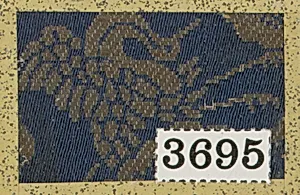
This exquisite silk textile sample, measuring just 1 x 1 inches, hails from a 19th-century sample book, a practical used by merchants to showcase intricate patterns to potential clients. Produced during Japan's Meiji era (1868–1912), a time rapid modernization blending tradition with Western influences, samples highlight the enduring mastery of Japanese weaving. Adorning the Metropolitan Museum of Art's Art collection since its acquisition through the Rogers Fund in 9, this piece exemplifies the precision of woven textiles in everyday and luxury goods. Craft from fine silk, the fabric features delicate bird motifs—a recurring theme in Japanese art symbolizing grace, seasonal change, and harmony with nature. The woven technique allowed artisans to create complex, reversible designs without dyes bleeding, showcasing technical virtuosity in such a diminutive scale. These samples were essential for the kimono and obi trade, reflecting Japan's global reputation for superior silk production. Though anonymous, the unknown artist's work invites us to marvel at the cultural depth packed into this tiny square: a window into Edo-period legacies evolving amid 19th-century transformation.