
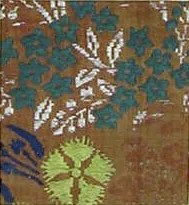
Textile with Autumn Grasses
Unknown Artist
Medium
Silk twill brocaded with silk
Dimensions
Sight: 3 7/16 x 3 1/8 in. (8.7 x 7.9 cm)
Classification
Textiles-Woven
Culture & Period
Japan · Edo period (1615–1868)
Department
Asian Art
Museum
Metropolitan Museum of Art, New York, NY
Credit
Gift of Sue Cassidy Clark, in honor of Dr. Barbara Brennan Ford, 2008
Accession Number
2008.335.66
Rights
Public Domain
Tags
Art Historical Context
This exquisite *Textile with Autumn Grasses* is a small yet captivating fragment from Japan's Edo period (16151868), a time of relative peace and cultural flourishing under the Tokugawa shogunate. Woven in silk twill and brocaded with additional silk threads, it measures just 3 7/16 x 3 1/8 inches, likely a remnant from a larger garment like a kimono or accessory. The intricate design features swaying autumn grasses, evoking the seasonal beauty of pampas-like stalks and leaves, a motif beloved in Japanese art for its poetic simplicity. The brocading technique—where supplementary wefts are woven to create raised, shimmering patterns—highlights the mastery of Edo textile artisans. This labor-intensive method produced luxurious fabrics that signified status and refined taste, often adorning the clothing of samurai, merchants, and nobility. Silk twill provided a subtle sheen and durability, making it ideal for everyday elegance amid Japan's vibrant urban culture in cities like Edo (modern Tokyo). In Japanese aesthetics, autumn grasses symbolize the fleeting nature of life (*mono no aware*), blending natural observation with philosophical depth. Preserved at the Metropolitan Museum of Art through the generous gift of Sue Cassidy Clark in honor of Dr. Barbara Brennan Ford, this piece invites visitors to appreciate the delicate artistry of woven narratives from centuries past.