
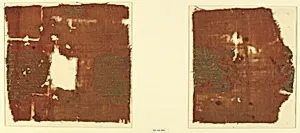
Textile with Lions and Peacocks
Unknown Artist
14th century
Medium
Silk, metal thread
Dimensions
Overall (a): 7 7/16 × 8 1/4 in. (18.9 × 20.9 cm) Overall (b): 7 3/8 × 6 1/2 in. (18.7 × 16.5 cm) Storage (Mat): 13 × 25 1/2 in. (33 × 64.8 cm)
Classification
Textiles-Woven
Culture
Italian
Department
Medieval Art
Museum
Metropolitan Museum of Art, New York, NY
Credit
Rogers Fund, 1909
Accession Number
09.50.995a, b
Rights
Public Domain
Tags
Art Historical Context
This exquisite *Textile with Lions andacocks*, crafted in 14th-century Italy, showcases the pinnacle of medieval textile artistry. Woven from luxurious silk and shimmering metal threads, it measures about 7 by 8 inches in its two fragments (a and b), preserved a larger mat. Produced during a time when Italian city-states like Lucca and Venice dominated Europe's silk trade, such textiles were symbols of wealth and prestige, often adorning church vestments, noble garments, or wall hangings. The bold motifs of lions—emblems of strength and nobility—and graceful peacocks highlight the era's fascination with symbolic animals drawn from heraldry and biblical imagery. The intricate weaving technique, likely a lampas weave combining silk wefts with metallic accents, created a rich, luminous effect that caught the light in grand medieval interiors. These small-scale fragments survive from larger works, offering a glimpse into the opulent craftsmanship that bridged Gothic and early Renaissance aesthetics. Acquired through the Rogers Fund in 1909, this piece now graces the Metropolitan Museum of Art's Medieval Art department, inviting visitors to appreciate the tactile splendor and cultural vitality of Italy's textile heritage.