
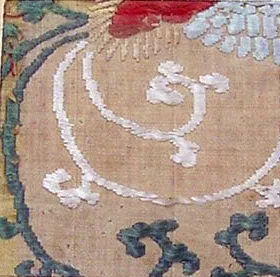
Textile with Partial Phoenix
Unknown Artist
Medium
Silk twill brocaded with silk
Dimensions
Sight: 3 1/16 x 3 1/16 in. (7.8 x 7.8 cm)
Classification
Textiles-Woven
Culture & Period
Japan · Edo period (1615–1868)
Department
Asian Art
Museum
Metropolitan Museum of Art, New York, NY
Credit
Gift of Sue Cassidy Clark, in honor of Dr. Barbara Brennan Ford, 2008
Accession Number
2008.335.53
Rights
Public Domain
Tags
Art Historical Context
This delicate fragment of silk twill brocaded with silk, known as *Textile with Partial Phoenix*, offers a glimpse into the refined textile traditions of Japan’s Edo period (1615–1868). During this era of relative peace and prosperity, Japanese artisans perfected intricate weaving techniques to create luxurious fabrics for kimonos, ceremonial robes, and household furnishings. The small square, measuring just over three inches on each side, likely once formed part of a larger patterned garment or decorative panel, its brocaded threads adding shimmering detail against the twill ground. The partial image of a phoenix hints at the motif’s deep cultural resonance in East Asian art. Symbolizing renewal and immortality, the phoenix often appeared in textiles associated with nobility or auspicious occasions. Though the artist remains unknown, the piece reflects the high level of skill required to weave such fine silk, a craft that flourished as trade and domestic demand grew throughout the Edo period. Now part of the Metropolitan Museum’s Asian Art collection, this textile invites viewers to appreciate the quiet beauty preserved in even the smallest surviving fragments of Japan’s rich textile heritage.