
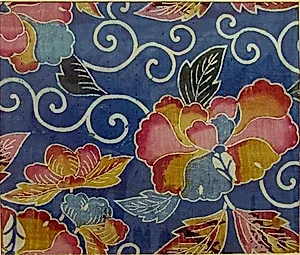
Textile with Peonies
Unknown Artist
Medium
Resist-dyed and painted plain-weave silk
Dimensions
Sight: 8 1/16 x 9 1/2 in. (20.5 x 24.1 cm)
Classification
Textiles-Dyed
Culture & Period
Japan · Edo period (1615–1868)
Department
Asian Art
Museum
Metropolitan Museum of Art, New York, NY
Credit
Gift of Sue Cassidy Clark, in honor of Dr. Barbara Brennan Ford, 2008
Accession Number
2008.335.6
Rights
Public Domain
Tags
Art Historical Context
This exquisite *Textile with Peonies* is a fragment of plain-weave silk, just 8 1/16 x 9 1/2 inches, adorned with lush peonies and leaves rendered in vibrant hues. Created during Japan's Edo period (1615–1868), a time of relative peace and cultural flourishing, it exemplifies the refined textile arts that thrived in urban centers like Kyoto and Edo (modern Tokyo). Peonies, known as *botan* in Japanese, symbolize wealth, honor, and bravery, making them a popular motif in decorative arts of the era. The artwork showcases sophisticated resist-dyeing and painting techniques, likely yūzen-style, where a rice-paste resist is applied to the silk to block dye in precise areas, creating sharp, intricate patterns. Artists then hand-paint details for depth and realism, transforming simple silk into a canvas rivaling paintings. This labor-intensive method, perfected in the 17th century, allowed for the mass production of luxurious fabrics for kimonos, screens, and furnishings, reflecting Edo Japan's prosperous merchant class and love for nature-inspired beauty. Housed in the Metropolitan Museum of Art's Asian Art Department, this piece—gifted in 2008—offers a glimpse into everyday elegance and technical mastery, inviting visitors to appreciate the delicate interplay of color and symbolism in Japanese textile heritage.