
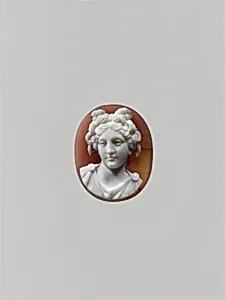
Thalia
second quarter 19th century
Medium
Onyx
Dimensions
Overall (confirmed): 1 1/8 x 7/8 in. (2.8 x 2.3 cm); 28.4 x 22.8 x 9.5 mm
Classification
Lapidary Work-Gems
Culture
Italian, Rome
Department
European Sculpture and Decorative Arts
Museum
Metropolitan Museum of Art, New York, NY
Credit
The Milton Weil Collection, 1940
Accession Number
40.20.38
Rights
Public Domain
Tags
Art Historical Context
Behold the exquisite gem *Thalia*, a masterful lapidary work carved in onyx by the renowned Italian artist Giuseppe Girometti during the second quarter of the19th century. Housed in the Metropolitan Museum of Art European Sculpture and Decorative department as part of The Milton Weil Collection, this tiny treasure measures just 1 1/8 x 7/8 inches (28.4 x 22.8 x 9.5 mm), yet captures the graceful essence of Thalia, the ancient Greek Muse of comedy andolic poetry. Girometti, a leading figure in Rome's vibrant cameo-carving tradition, elevated such miniature sculptures into high art, blending classical mythology with neoclassical precision. Onyx, prized for its layered bands of white and dark chalcedony, was the ideal medium for intaglios and cameos like this one, allowing artists to exploit contrasting tones for dramatic relief. Girometti's technique—likely engraving or shallow carving—showcases his virtuosity in rendering fine details on such a minuscule scale, a skill honed in Rome's workshops that supplied Europe's elite with jewelry and seals. These gems revived Renaissance interests in antiquity, serving as both decorative objects and symbols of erudition. In a 19th-century revival of classical themes, *Thalia* embodies the enduring allure of the Muses, inspiring artists and poets alike. Visitors, imagine this jewel adorning a finger ring or brooch, whispering tales of laughter and verse from ancient theaters to modern drawing rooms—a perfect emblem of Italian lapidary excellence.