
The Abundance of the Mountains
1765
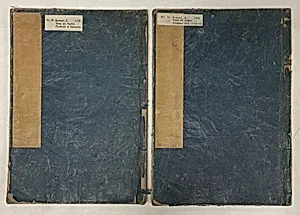
Medium
Two volumes; polychrome woodblock printed book
Dimensions
Each: 10 7/8 × 7 3/4 × 3/8 in. (27.6 × 19.7 × 1 cm)
Classification
Illustrated Books
Culture & Period
Japan · Edo period (1615–1868)
Department
Asian Art
Museum
Metropolitan Museum of Art, New York, NY
Credit
Rogers Fund, 1918
Accession Number
JIB54a, b
Rights
Public Domain
Art Historical Context
**The Abundance of the Mountains** is a captivating two-volume illustrated book created by Katsuma Ryūsai in 1765, during Japan's vibrant Edo period (1615–1868). This polychrome woodblock printed work, measuring about 10 7/8 × 7 3/4 inches per volume, exemplifies the era's mastery of printmaking. Ryūsai, a skilled artist of the time, likely drew inspiration from the natural world, evoking the lush bounty of Japan's mountains through vivid imagery and intricate designs. Woodblock printing with multiple colors—polychrome—was a revolutionary technique in Edo Japan, allowing for the mass production of richly hued books that brought art to a wider audience beyond the elite. These illustrated books, classified in the Asian Art department at the Metropolitan Museum of Art (acquired via the Rogers Fund in 1918), blended text and visuals to celebrate nature's abundance, reflecting the period's fascination with the beauty and fertility of the landscape amid urban growth and cultural flourishing. As a cultural artifact, this work highlights the Edo era's innovative publishing industry, where books like Ryūsai's served as both educational tools and aesthetic delights. Visitors can appreciate how such prints captured Japan's reverence for the mountains, symbols of enduring strength and prosperity.