
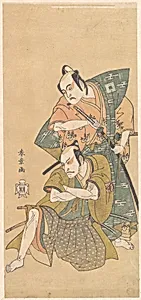
The Actor Ichikawa Yaozo II as a Samurai
ca. 1765
Medium
Woodblock print (nishiki-e); ink and color on paper
Dimensions
12 x 5 1/2 in. (30.5 x 14.0 cm)
Classification
Prints
Culture & Period
Japan · Edo period (1615–1868)
Department
Asian Art
Museum
Metropolitan Museum of Art, New York, NY
Credit
The Francis Lathrop Collection, Purchase, Frederick C. Hewitt Fund, 1911
Accession Number
JP703
Rights
Public Domain
Tags
Art Historical Context
In the vibrant world of Edo-period Japan (1615–8), Katsukawa Shunō's *The Actor Ichikawa Yaozo as a Samurai* (ca. 1765) captures the theatrical flair of kabuki drama. Shunshō, a leadingkiyo-e master and founder of the Katsukawa school, specialized in yakusha-e—dynamic portraits of actors—that brought the "floating world" of entertainment to life. Here, the famed kabuki performer Ichikawa Yaozō II strikes a fierce pose as a samurai, sword at the ready, embodying the heroic intensity of stage roles that captivated urban audiences in Edo (modern Tokyo). This nishiki-e woodblock print, meaning "brocade picture," showcases the revolutionary multi-block color printing technique perfected in the mid-18th century. Ink and vibrant pigments on paper create a luxurious, jewel-like effect, with precise registration aligning colors for depth and realism. At just 12 x 5½ inches, it was affordable yet exquisite, designed for fans to collect and display, democratizing art in a booming print culture. Housed in the Metropolitan Museum of Art's Asian Art collection, this print highlights Shunshō's influence on later giants like Hokusai and Hiroshige, preserving a snapshot of Japan's theatrical golden age where actors like Yaozō were celebrities, blending artistry, drama, and sword-wielding bravado.
About the Artist
Katsukawa Shunshō 勝川春章 (Japanese) · 1726 –1792
Japanese, 1726–1792